Water reservoirs and potable water storage tanks are an integral part of water supply systems in residential buildings, office towers, public institutions, industrial facilities, commercial centers, and municipal infrastructures. These reservoirs are designed to ensure a continuous and reliable water supply and support the daily needs of residents, employees, visitors, and other users.
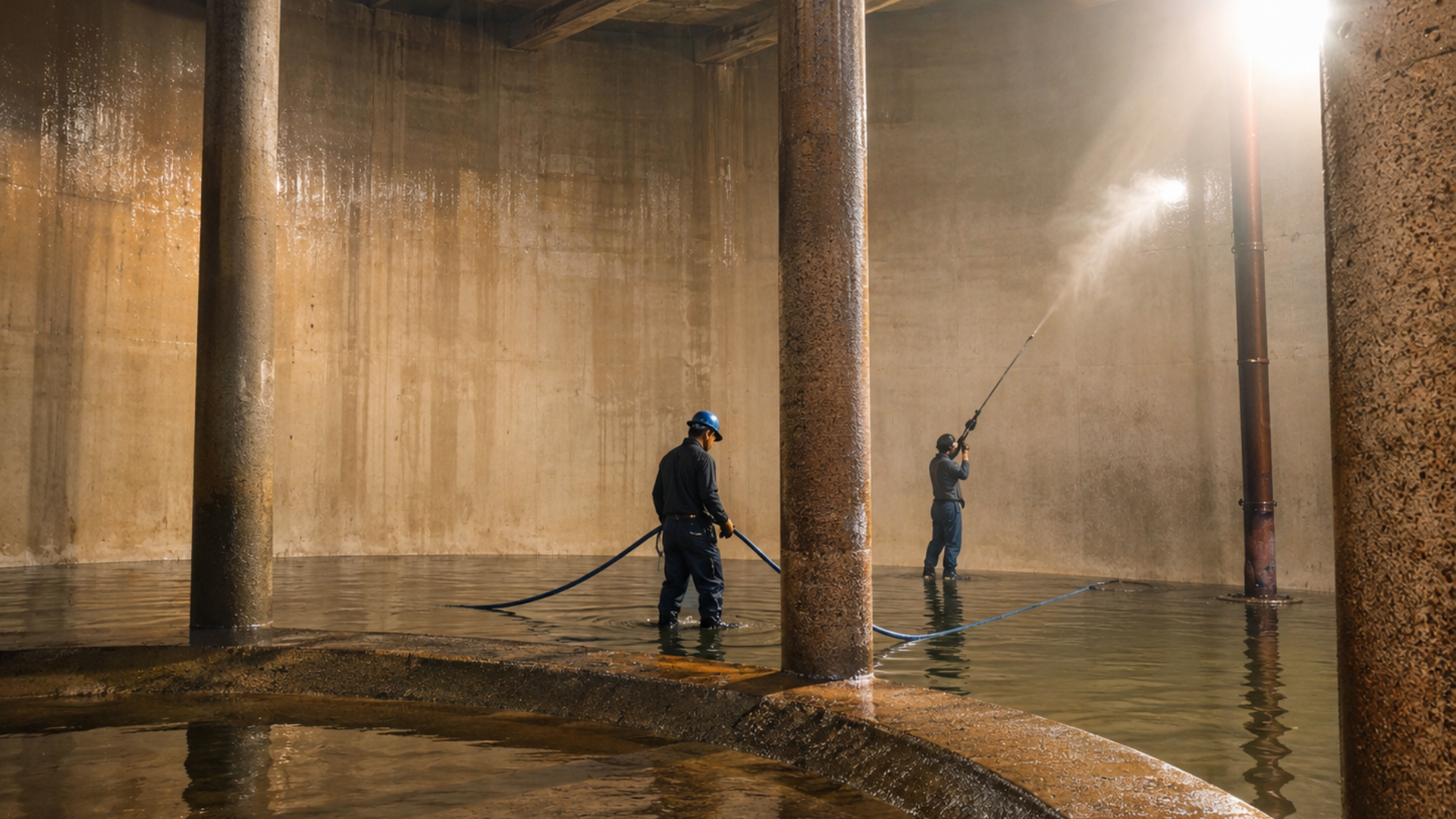
Over time, water reservoirs may accumulate sediment, rust, sand, dust, debris, and other contaminants that can affect water quality and the proper operation of the supply system. For this reason, water reservoir cleaning and water reservoir disinfection are essential components of maintaining safe and efficient water systems.
At Tavas, this service is delivered by PowerJet, the company's dedicated division specializing in the cleaning, purification, and disinfection of water reservoirs. PowerJet provides professional solutions for municipalities, public institutions, industrial facilities, and commercial properties.
Why Is Water Reservoir Disinfection Essential?
Potable water reservoirs and storage tanks, which are commonly found in municipalities and high-rise buildings, are required to undergo periodic cleaning and disinfection in accordance with the regulations of the Israeli Ministry of Health. The purpose is to protect public health and maintain the quality of drinking water.
Thousands of water reservoirs of various types are currently in operation throughout Israel, ranging from large-scale storage facilities operated by water corporations and local authorities to potable water reservoirs serving hotels, hospitals, office towers, residential buildings, commercial centers, industrial plants, and other facilities.
Water reservoir disinfection and cleaning help prevent the accumulation of sediment, rust, dirt, and contaminants, maintain the proper operation of the water supply system, and reduce sanitation-related risks. In addition, periodic maintenance makes it possible to identify defects, wear, and structural issues within the reservoir before they develop into more significant problems.
Permits and Certifications
Upon completion of the water reservoir cleaning and disinfection process, the client receives organized documentation confirming that the work was carried out. This documentation serves as proof that the reservoir was treated in accordance with accepted procedures and helps maintain an organized maintenance record over time.
As part of the service, a water sample is submitted to an accredited laboratory for testing and approval of compliance with Ministry of Health requirements. Receiving laboratory certification is an important part of the process and provides assurance that the reservoir meets the required cleanliness standards.
In addition, through the PowerJet division, it is possible to obtain a Ministry of Health certification for disinfection using HTH tablets, in accordance with the standards commonly applied by Mekorot.
Tavas provides a comprehensive solution that includes the execution of the work, water sampling, professional supervision, and the issuance of the required certifications based on the nature of the project and the client’s requirements.
In newly constructed buildings and development projects, water reservoir cleaning and disinfection may form part of the preparation process before occupancy and the activation of the building’s water systems.
In large facilities where additional maintenance activities are performed, such as parking garage cleaning, it is common practice to consolidate all maintenance activities and related documentation under a structured work plan that enables ongoing monitoring and control.
How Often Is Water Reservoir Disinfection Required by Law?
According to the regulations of the Israeli Ministry of Health, drinking water supply systems must undergo periodic cleaning once a year. This process is intended to maintain water quality and protect public health, and it must be performed by a qualified professional in accordance with the relevant guidelines.
Does Water Reservoir Disinfection Require a Temporary Water Shutdown?
During cleaning and disinfection operations, there may be situations in which a temporary interruption of the water supply is required. The implementation method depends on the reservoir structure, the water supply system, and the specific characteristics of the site.
What Does a Disinfection Certificate Include?
A disinfection certificate typically includes the site details, the date the work was performed, and information regarding the procedures that were carried out. In addition, as part of the process, a water sample is submitted to an accredited laboratory for testing and verification of compliance with Ministry of Health requirements.
Water reservoir disinfection and cleaning are an integral part of maintaining safe and reliable water supply systems. Carrying out the work through a qualified, experienced, and professional provider helps ensure water quality, system reliability, and ongoing compliance with Ministry of Health regulations.