June 2026
High Pressure Water Cleaning
Ilan Shimoni
Adv., CEO and Founder of Tavas
High Pressure Water Cleaning

High pressure water cleaning is one of the most effective and widely used methods for cleaning surfaces, building facades, parking facilities, and infrastructure. The method is based on the use of high pressure water streams to remove dirt, soot, oil, paint stains, graffiti, dust, and deposits that have accumulated over time.


The method is suitable for cleaning both indoor and outdoor surfaces across a wide range of environments, including office buildings, residential properties, industrial facilities, garages, parking facilities, gas stations, logistics centers, packing houses, cold storage facilities, and other operational areas.


At Tavas, the service is provided by PowerJet, the company's specialized division for high pressure water cleaning solutions for buildings, infrastructure, indoor surfaces, and outdoor areas.


What Can Be Cleaned with High Pressure Water?


High pressure cleaning is capable of addressing a wide range of dirt, contaminants, and surface buildup, including in locations where conventional cleaning methods may not deliver satisfactory results.


High pressure water cleaning can be used to remove oil stains, soot, paint, graffiti, mold, dust, rust, mud, and accumulated deposits from a variety of surfaces. The method is suitable for cleaning concrete, asphalt, sidewalks, interlocking paving stones, walls, fences, operational yards, industrial flooring, and other indoor and outdoor surfaces. 

When oil stains, paint, soot, graffiti, mold, or rust remain on a surface for an extended period, they may penetrate the material and become significantly more difficult to remove. High pressure water cleaning can effectively address even stubborn contamination that has accumulated over many years by reaching into cracks, joints, and hard-to-access areas that are often difficult to clean using conventional cleaning methods.

In many cases, pressure washing is carried out as part of (Link: Post-Construction Cleaning) projects, where there is a need to remove construction residues, dust, paint stains, and dirt that accumulated during the work.

A significant advantage of the method is the ability to adjust the pressure level according to the type of surface, making it possible to achieve thorough cleaning while preserving the integrity of the material.


Parking Facility and Surface Cleaning


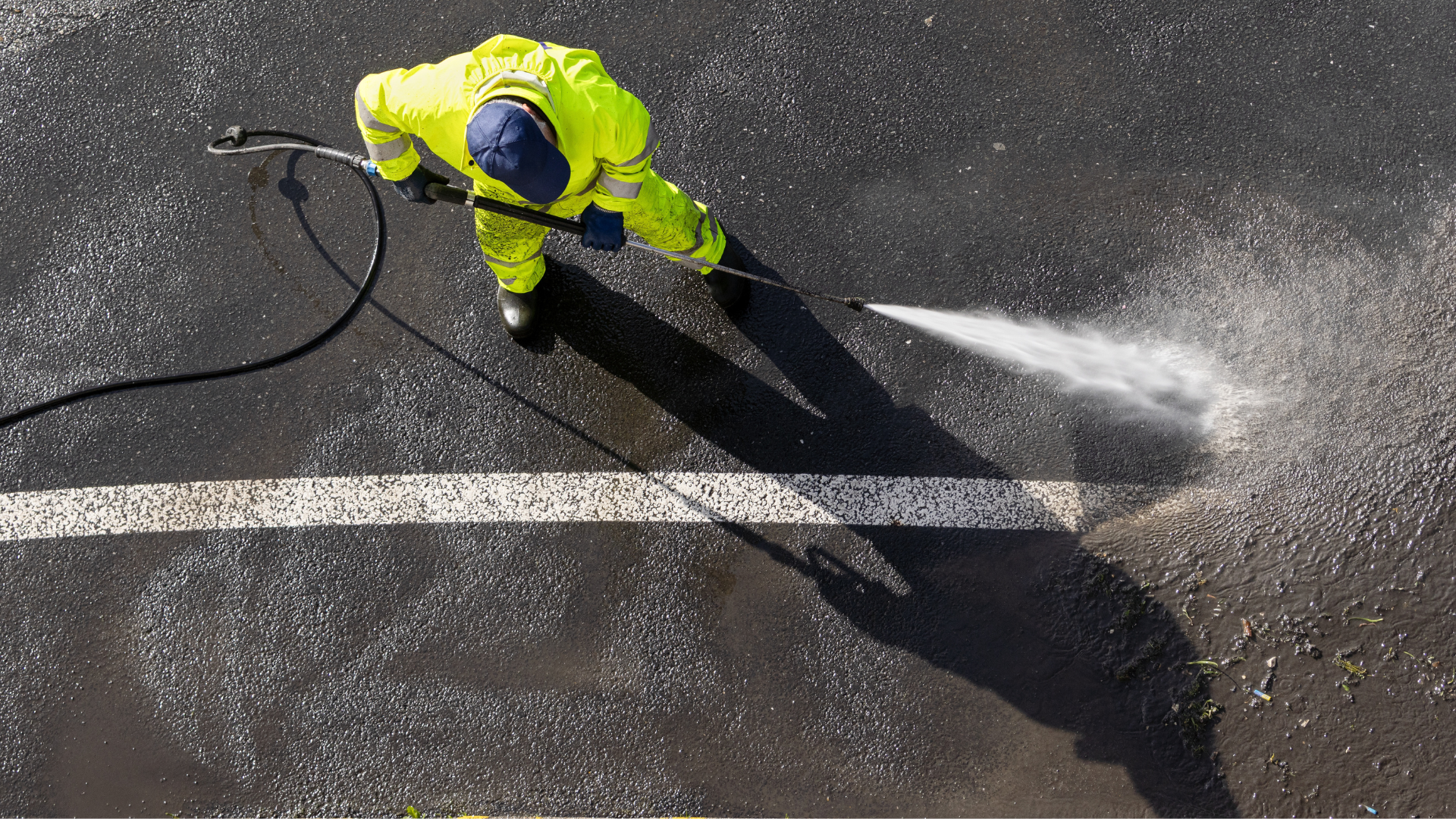
Parking facilities and operational surfaces are constantly exposed to vehicle traffic, oils, fuels, dust, and dirt that accumulate over time and affect both the appearance and maintenance of the site.


High pressure cleaning provides an efficient solution for cleaning large areas within a relatively short period of time while removing oil stains, soot, tire marks, and stubborn dirt.


Depending on the type of contamination and the surface being cleaned, high pressure water, hot water, and specialized plant-based cleaning agents can be combined. This approach helps break down oil stains, soot, and industrial dirt while achieving more thorough cleaning results.


In cases involving particularly stubborn stains, high pressure water cleaning can be combined with hot water. Professional systems can reach temperatures of up to 80°C, depending on the surface type and the characteristics of the contamination.


The method is suitable for a wide range of surfaces, including concrete, asphalt, interlocking paving stones, service areas, loading and unloading zones, operational yards, and other outdoor surfaces.


When it comes to parking facilities, pressure washing is an essential component of (Link: Parking Facility Cleaning) services and helps maintain a clean, safe, and well-maintained parking environment.


Facade and Wall Cleaning


Building facades and exterior walls are exposed over time to dust, soot, air pollution stains, graffiti, stickers, posters, and accumulated dirt.


High pressure water cleaning makes it possible to remove layers of contamination from the surface and significantly improve the appearance of the building.


The method is suitable for a variety of cladding materials, including Jerusalem stone, concrete, spray plaster, wall cladding systems, and other surfaces. Adjusting the pressure level according to the material allows the work to be carried out efficiently while protecting the surface.


When cleaning a building envelope, pressure washing is often integrated into (Link: Building Facade Cleaning) projects aimed at improving the appearance of the building and extending the lifespan of its cladding.


The method is also effective in (Link: Graffiti Removal) projects, where there is a need to remove markings, paint, stickers, and unauthorized notices from walls, fences, and facades.


For high-rise buildings or areas with limited accessibility, pressure washing can be combined with (Link: Rope Access Cleaning) solutions, providing safe and efficient access to the building envelope.


Pressure Levels and Surface Compatibility


One of the key advantages of pressure washing is the ability to adjust the pressure level according to the type of surface and the level of contamination.


Relatively light dirt, such as dust, mud, or surface deposits, can be removed using moderate pressure. In contrast, oil stains, soot, paint, or layers of dirt that have accumulated over many years may require higher pressure levels and advanced cleaning techniques.


Cleaning sidewalks, public plazas, and interlocking paving stones may require different pressure levels than those used for building facades, cladding systems, or delicate stone surfaces. Adjusting the pressure level for each surface allows dirt to be removed effectively while preserving the material and preventing unnecessary damage.


The ability to select the appropriate pressure level for each surface is one of the factors that influences both the quality of the cleaning results and the long-term preservation of the surface.


Professional Equipment vs. Residential Equipment


Many people are familiar with residential pressure washers used for cleaning balconies, yards, and private vehicles. However, there is a significant difference between residential equipment and professional systems used for industrial and commercial projects.


One of the most common types of equipment in the industry is a pressure washer, which generates high-powered streams of hot or cold water. These systems are available in both residential and industrial models, with professional equipment designed for continuous operation on large-scale projects and in demanding environments.


Industrial pressure washing equipment allows for precise pressure adjustment, the use of specialized accessories, treatment of large areas, and the integration of additional cleaning technologies when required.


In addition, professional systems enable more efficient cleaning of parking facilities, building facades, infrastructure, operational surfaces, and areas exposed to heavy dirt accumulation, while delivering more consistent and thorough results.


Water Efficiency and Sustainability


Despite operating at high pressure levels, high pressure water cleaning is considered an efficient cleaning method from a resource utilization perspective.


One of the key advantages of the method is its ability to deliver effective cleaning while using less water compared to traditional cleaning methods. The high pressure stream removes dirt in a focused and precise manner, reducing both cleaning time and water consumption.


While a standard water hose may consume between 25 and 50 liters of water per minute, pressure washing systems typically use only 7 to 15 liters per minute while maintaining high cleaning performance. This combination enables superior cleaning results alongside significant water savings.


In many cases, the use of chemical cleaning agents can also be reduced by combining high pressure water, hot water, and more environmentally friendly cleaning products.


Additional benefits of the method include time savings, efficient cleaning of large areas within short timeframes, thorough surface cleaning, and preservation of the original appearance of the surface without unnecessary scratches or marks.

What Can Be Cleaned with Pressure Washing?


Pressure washing is suitable for cleaning a wide range of surfaces and contaminants, including oil stains, soot, graffiti, paint, mold, dust, mud, rust, and accumulated deposits. The method is commonly used for cleaning parking facilities, sidewalks, walls, building facades, fences, concrete surfaces, asphalt, and interlocking paving stones.


Can High Pressure Water Damage Walls or Flooring?


When performed professionally and with the pressure level properly adjusted to the surface type, pressure washing can deliver effective cleaning while preserving the material. Using an inappropriate pressure level may damage certain surfaces, which is why it is important to tailor the cleaning method to each specific application.


What Is the Difference Between Residential and Professional Equipment?


Residential equipment is generally suitable for small-scale cleaning tasks and limited applications. Professional equipment, on the other hand, is designed for continuous operation, large surface areas, adjustable pressure settings, and the use of specialized accessories that deliver a higher standard of cleaning results.


High pressure water cleaning is an advanced and effective cleaning method suitable for a wide range of surfaces and applications. By adjusting the pressure level to the surface type, using professional equipment, and applying the appropriate cleaning techniques, it is possible to achieve thorough cleaning, preserve the appearance of the property, and extend the lifespan of surfaces and infrastructure over time.