These days, the Canadian director Philippe Falardeau’s film “The Good Lie” is screening in Israel. The film tells the story of four refugees from Sudan who are resettled in the United States. It addresses one of the most difficult and relevant issues in the world today: political refugees, asylum seekers, migrant workers and undocumented immigrants. “Compassionate and righteous” America speaks clearly, and one day after their arrival in the state of Missouri, the four refugees report to the local employment office to be legally placed in jobs. That is where the film ends.
And now for the sequel – the Israeli version. Israeli law prohibits the employment of foreign workers without a permit and a work visa, which are issued sparingly, under supervision and in limited quotas, only for the caregiving, agriculture and construction sectors, and only through licensed manpower agencies. Therefore, employing foreign workers in all other sectors of the economy is strictly prohibited and constitutes illegal employment that carries criminal sanctions.
The Government of Israel, through the Ministry of Interior, makes every effort to deport foreign workers from the country and prevent them from working by means of detention and holding facilities. The Supreme Court, in its rulings on foreign workers, refugees and similar matters, has determined that a policy of non-deportation must be applied. The Ministry of Economy, responsible for enforcing labor and employment laws, has never authorized the employment of foreign workers in the cleaning sector, yet for years has adopted a policy of non-enforcement in this field. Labor courts, and rightly so, have ruled that labor laws and sector-wide collective agreements apply territorially, regardless of whether the employment of the foreign worker is legal or not.
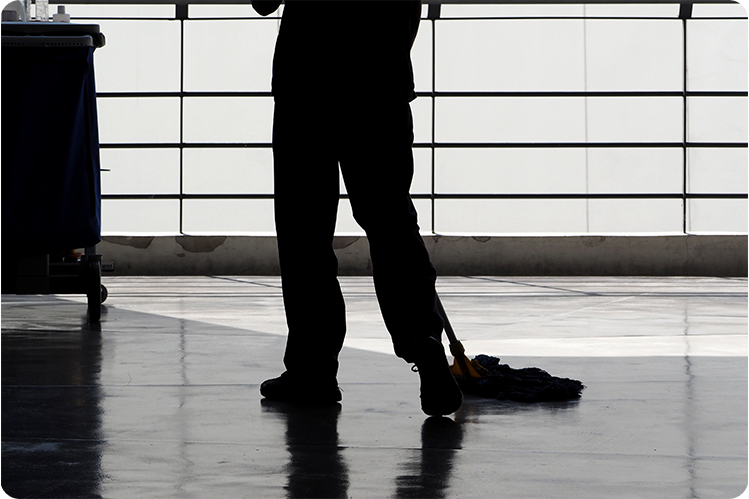
The Ministry of Finance and the Tax Authority are indifferent to the legality of employment but not to tax liability. They require a 30 percent employment levy and do not allow a foreign worker to receive the first income tax credit point. As a result, in this legal and operational vacuum, the Israeli public often acts independently and concludes that refugees can be employed in cleaning and manual labor positions, and in any other needed work, even without explicit work authorization. But what about compliance with labor laws and payment of mandatory wage components? Can even the most conscientious employers truly comply with all labor law requirements? Let us examine:
Medical insurance: for only one dollar per day, it is possible to purchase a questionable medical insurance policy for a foreign worker. Does it include vaccinations, laboratory tests, periodic check-ups and a personal medical record? No.
Pension and severance funds: no insurance company in Israel currently offers pension or severance funds for foreign cleaning workers.
Education fund (Keren Hishtalmut): although contributions for cleaning workers became mandatory on October 1, 2014, there is no education fund available in Israel for foreign workers.
Employee records for tax and welfare authorities: without an Israeli identification number or an alternative officially accepted identifier, there is no way to register foreign workers in the country’s tax and welfare systems.

We can clearly see that in the absence of a legal and organizational framework, in the absence of a deliberate and coordinated policy by both the executive and legislative branches, and without a clear and decisive statement from the National Labor Court, the State of Israel is creating a harmful employment environment with its own hands. This reality harms both asylum seekers and employers, whether innocent or not. Labor courts are flooded with claims filed by those living among us. And thus, in the mind of the foreigner, different from us, this experience becomes etched for life. There is no good lie — only a bad one.
Can this chaotic situation truly reflect the meaning of the “good lie” intended by the film’s director? Go watch the film. Especially those of you who have built and continue to build political, social and perhaps even financial capital from the issue of refugees and migrants living among us in what is known as “the State of Tel Aviv.”