When oil stains, paint, soot, graffiti, mold, or rust remain on a surface for an extended period, they may penetrate the material and become significantly more difficult to remove. High pressure water cleaning can effectively address even stubborn contamination that has accumulated over many years by reaching into cracks, joints, and hard-to-access areas that are often difficult to clean using conventional cleaning methods.
What Can Be Cleaned with Pressure Washing?
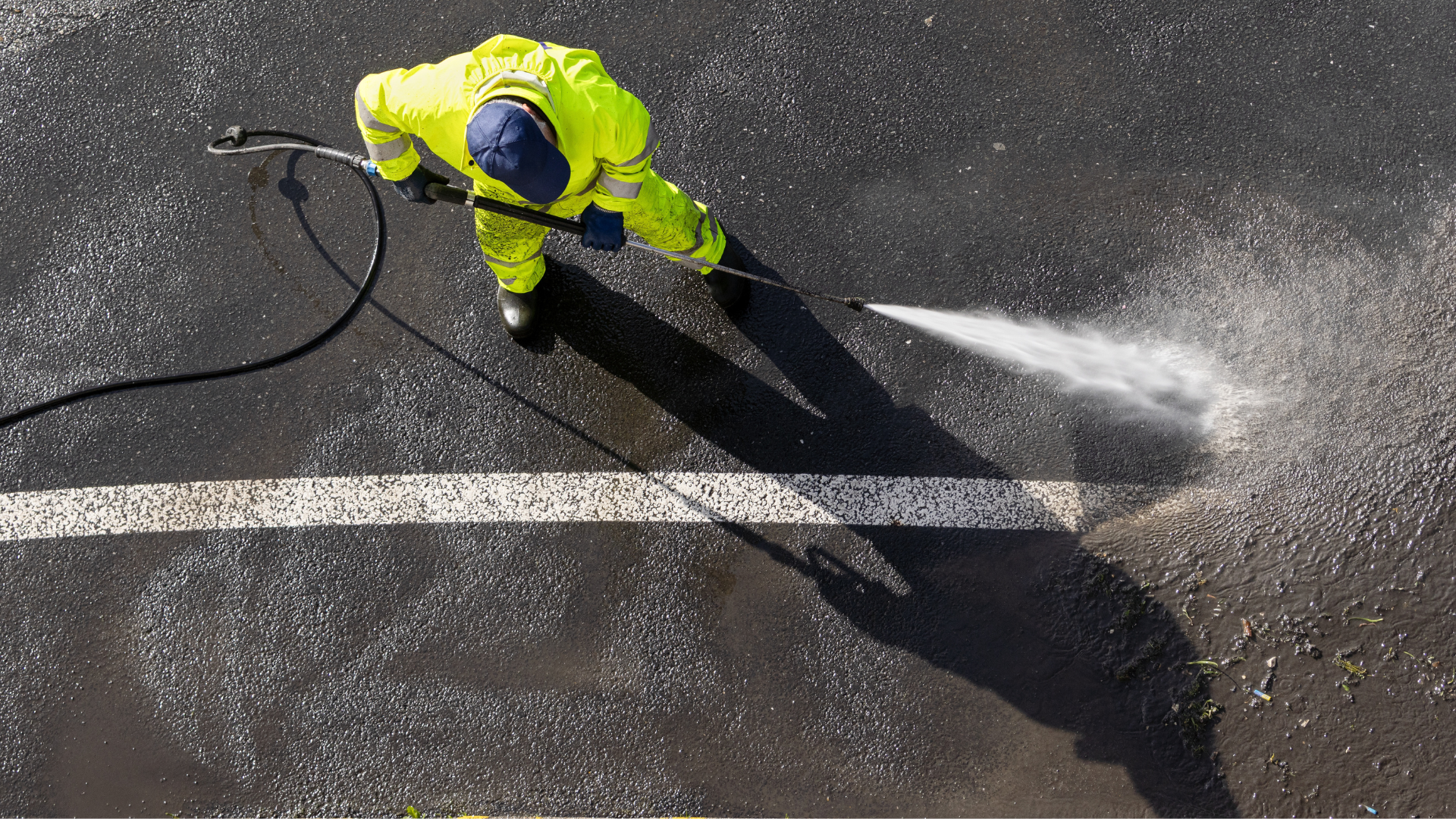
Pressure washing is suitable for cleaning a wide range of surfaces and contaminants, including oil stains, soot, graffiti, paint, mold, dust, mud, rust, and accumulated deposits. The method is commonly used for cleaning parking facilities, sidewalks, walls, building facades, fences, concrete surfaces, asphalt, and interlocking paving stones.
Can High Pressure Water Damage Walls or Flooring?
When performed professionally and with the pressure level properly adjusted to the surface type, pressure washing can deliver effective cleaning while preserving the material. Using an inappropriate pressure level may damage certain surfaces, which is why it is important to tailor the cleaning method to each specific application.
What Is the Difference Between Residential and Professional Equipment?
Residential equipment is generally suitable for small-scale cleaning tasks and limited applications. Professional equipment, on the other hand, is designed for continuous operation, large surface areas, adjustable pressure settings, and the use of specialized accessories that deliver a higher standard of cleaning results.
High pressure water cleaning is an advanced and effective cleaning method suitable for a wide range of surfaces and applications. By adjusting the pressure level to the surface type, using professional equipment, and applying the appropriate cleaning techniques, it is possible to achieve thorough cleaning, preserve the appearance of the property, and extend the lifespan of surfaces and infrastructure over time.